I will make this happen, and one day, she will thank me!
Come back every Monday for a new original SNG webcomic!
Alex is our resident Webcomic creator. He grew up in Puerto Rico, but didn’t reach true Nerdom until he came state side when he was in middle school. He’s been drawing since he was five, but has only started posting Webcomics in the past year. You can check out his amazing and original work at tapastic.com/gomezalexj.
Let’s be real – books are amazing: they are these tiny little packets of dead trees that transport you to another world. Literature has long been a place to explore the weird, taboo, and/or morbid, so it’s not too much of a surprise that they attract an eclectic crowd.
Any English major can tell you: the life of an author is usually as interesting as anything they’ve written, and often a lot more surreal. The girls of literature in particular are brilliant, badass, and have a habit of throwing convention to the wind.
These ladies are three of the best: they’re testaments to saying “screw it” to the social constructs of the world. Their work is incredible on its own, don’t get me wrong, but writers can be a work of art all on their own.
#1 – Tamora Pierce
Known for: The Lioness Quartet
Strong female protagonists are on the rise (we’re slowly getting the hang of this whole equal-portrayal thing in books and media) but I still have yet to find an author who can write a female character like Tamora Pierce.
Pierce grew up reading Tolkien and Arthurian legends, writing fan fiction, and befriending pigeons. She crochets. She is, to be blunt, one of us. So when she noticed a lack of good female characters in the works she enjoyed, Tamora Pierce decided to thoroughly deconstruct gender roles in her own writing.
Alanna: The First Adventure was published in 1983 and was (along with Disney’s Mulan [1998]) the introduction to cross-dressing for an entire generation of young girls. For someone like me, who grew up with a huge assortment of dead white men for heroes, it was a refreshing change.
Gender discrimination was a very real thing in Pierce’s world, but the picture she painted was far from hopeless. Discrimination was oppressive, but her characters faced it head-on and kicked its butt. This was not limited to women: The Lioness Quartet‘s main character has a twin brother who escapes the masculine future of the knighthood to become a scholar and mage instead.
I know I’m not the only one out there with Pierce-inspired childhood stories. There isn’t a female writer born after 1980 who hasn’t admired elements of her work: everyone should aspire to challenge the status quo as thoroughly as she does.
#2 – Maya Angelou
Known For: I Know Why The Caged Bird Sings
A ridiculous number of people know Maya Angelou by nothing more than her poetry. A few of her tamer poems get tossed around classrooms as examples of black culture every February, picked apart, and promptly forgotten. This has its merits. Way too many people don’t appreciate poetry. But it means the actual reasons to celebrate her life are completely whitewashed.
Maya Angelou was, over the course of her lifetime, a poet, a dancer, a prostitute, a journalist, a playwright, an essayist, an actress, a director, and a civil rights leader. She was a friend of both Martin Luther King Jr. and Malcolm X. She endured racism, divorce, sexism, and even rape.
She was mute for five years of her life as a result of trauma, and once she recovered she spoke loudly and clearly for the rest of her life. She’s also a fairly serious addition to a somewhat lighthearted article, and the least-obviously-geeky of the three.
Maya Angelou should be right up there on the required reading list with Douglas Adams. There is no writer in the world who portrays passion, the driving force of nerd girls everywhere, as well as she does. You can’t read a word she writes without feeling your own voice get a little stronger.
#3 – Mary Shelley
Known for: Frankenstein
The best zombie story ever written was written by a 19-year-old girl in a cabin, surrounded by a bunch of poets, over a rainy summer.
She had just lost a child, run away with a married man, and (according to her own writing) she felt pretty inferior to the literary giants she was hanging out with: Lord Byron and her then-boyfriend Percy Shelley. When Lord Byron suggested they have a ghost-story contest, she spent the first few days at a loss for ideas.
Mary Shelley wrote Frankenstein that summer. She blew them all away.
Mary was a writer from youth and raised by her father. She believed in free love and ran away at seventeen to practice it. She was the daughter of Mary Wollstonecraft, an amazing first-wave feminist, and it is a shame the two never got to know each other. She once caught smallpox helping a lesbian couple run away together.
Shelley played gender roles like a violin. Where most of her contemporary female writers focused on a female narrator (not a bad thing), Mary flipped convention the bird and wrote Frankenstein with a male protagonist.
Not from a male perspective, mind: there are a lot of feminine undertones when you deal with the creation of life, not to mention the themes of ostracization and family life that seem pretty heavy for a horror novel. If you don’t aspire to live a life as chaotic as hers, take inspiration from that self-awareness: there are so many layers in Shelley’s writing it’d make an onion cry.
Mix that up with a voice inspired by Angelou while you challenge the status quo like Pierce, and nothing in the world can stop you.
Alex is currently enjoying a longtime addiction to stories, which she feeds through books, tabletop RPGs, and an excessive collection of video games. She’s currently seeking to publish a novel about a bookshop that gets abducted by aliens, loves to crochet, and blogs about it all over at https://alexpenland.wordpress.com/. You can follow her on Twitter @AlexPenname, where she spends two hours every Saturday livetweeting whatever books strike her fancy.
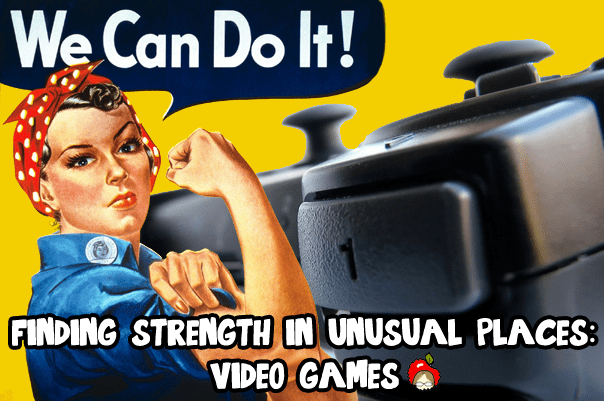
Today piece is all about sharing insights on Jane Mcgonigal’s amazing TED talk regarding how video games can increase your life span and be an incredible source of strength. Seems like some kind of nerd-scam, doesn’t it?
No funny business – promise!
I assure you, there is no techno babble that attempts to convince non-gamers that they’re missing out. It’s pretty simple, actually – read on to find out!
I’ll be posting a link to the TED Talk video (which I discovered during one of my many late night TED Talk binge episodes…) at the end of this post – it’s just under 20 minutes long and well worth the watch.
Mcgonigal is a video game developer, which gives her a unique view of games, how they’re built, what their intent is, and the joy and purpose that can come from them. She begins her talk explaining how she often has to defend the nature of gaming since the popular perception is that games are a waste of time. That everyone that plays video games, undoubtedly, will regret spending so much time on them come the final hour on their death bed.
She explains that – believe it or not – some science has been performed on the topic. Based on a hospice survey, the most reported regret registered by patients is not, in fact, spending too much time playing games or on recreational activities – it is working too much.
Way better than video games, right? Wrong.
Here are the remaining four of the top five regrets:
“I wish I’d stayed in touch with my friends.”
“I wish I’d let myself be happier.”
“I wish I had the courage to express my true self.”
“I wish I led a life true to my dreams, instead of what others expected of me.”
She goes onto explain how the regret of working too much is often associated with wishing they’d had more time with their family and kids. She points out that studies have shown parents who play games with their children have much stronger real life relationships with them.
Wanting to spend more time with friends can be directly correlated to more social-based games like Words with Friends and Farmville.
She points out that studies have also shown that video games often outpace the positive results of pharmaceuticals (although I have to imagine the addictive-ness of either may be the same).
Wishing to have the courage to express your true self can be easily associated with games like World of Warcraft where you can build your truest self for all to see.
I get to be who I want to be – the power is intoxicating!
The connections Mcgonigal makes are simple but profound – what we see as a waste of time seems to be all the things we wish we’d done when we get to the end of our lives. I don’t know about you, but this made me stop and think I’d been seeing the world upside-down all this time.
What comes next is equally as thought-provoking in my mind. She explains that a head injury had her bed-ridden for 3 months of her life, and in this time – limited in what she could do – suicidal ideation began to set in.
I believe this is a concept that most of us can identify with. Many people – not just us nerds – struggle with depression and anxiety that can turn into something big, scary and seemingly insurmountable. Mcgonigal takes a fascinating approach to a way we might be able to overcome these destructive feelings.
To overcome her own feelings of depression, she decided to start playing real-world games – since video games were off limits due to her condition. Her game worked on the same principle, however – that by performing tasks or behaviors, she would gain and unlock achievements.
She called this game, “Jane the Concussion Slayer”
She recalled from studying game psychology that when we play games, we tackle problems with more creativity, optimism and determination. In addition, it makes people more likely to reach out for help.
And in the spirit of reaching out for help, she asked her sister to join in on the game she was creating. They identified the triggers for her concussion symptoms – like bright lights or crowds – and created and collected ‘power-ups’. Power-ups could be as simple as cuddling her dog for 10 minutes or walking around the block just once. Once she put parameters around it, it all seemed easy:
Adopt a secret identity
Recruit allies
Battle the bad guys
Activate the power-ups
Within days, Mcgonigal felt the fog of her depression begin to dissipate. Though the physical symptoms of her condition persisted for another year, as she says, she wasn’t ‘suffering.’
Understanding her situation was unique, but wanting to spread the concept, Mcgonigal re-branded the ‘Concussion Slayer’ to ‘SuperBetter’ with the same rules. The response was incredible as people with all kinds of conditions reported their lives improved drastically due to adopting the practices of SuperBetter.
The game was allowing these people to experience something scientists call Post-Traumatic Growth. There are four kinds of strengths that contribute to scientific growth:
Physical resilience – simply not sitting still.
Mental resilience – will power gained through tackling and completing a challenge (even a small one!).
Emotional resilience – actively trying to experience at least three positive emotions for every one negative. It dramatically improves your health and ability to tackle challenges!
Social resilience – when you get more strength from your friends, family, community, via gratitude or physical touch – even through a long handshake!
Pro-tip: long handshakes will increase the urge to help the person you shake hands with!
Mcgonical goes on to explain when these four types of resilience are exercised; science shows your life expectancy can increase significantly. It is these four principles that her real-life game is based on, which has all kinds of phenomenal side-effects such as happiness, longer life and fewer death bed regrets.
Consider the practical application of actively seeking to install these practices in your life via a never ending game like SuperBetter. Those with anxiety could boost their score by making eye contact with their friends or colleagues – made easier because it is an achievement to be unlocked instead of an awkward, painful necessity. Those with social nervousness could unlock an achievement by standing straighter in a crowd. Depression could be alleviated by seeking out positive experience like spending time with a pet or making their favorite tea.
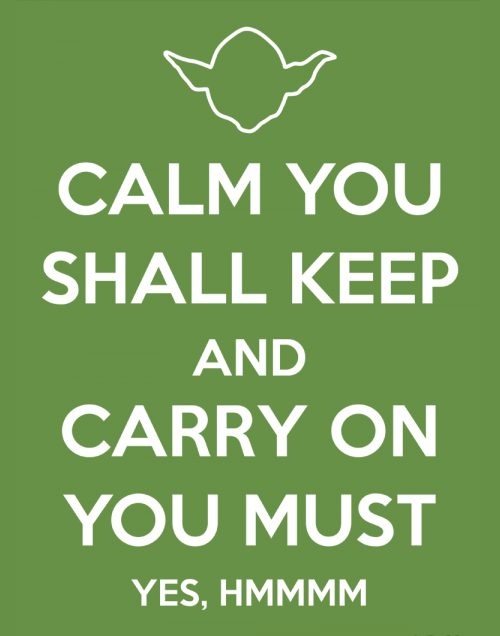
When I was younger and trying to get through a tough transition in my life – I recall making up and playing a similar game. I was limited by my mental resources at the time, and as we all know by now, I am a huge Star Wars nerd. I would play the ‘Jedi’ game. This game consisted of always keeping my cool in anger and anxiety situations – in grocery stores, at home, at school. The objective of the game was to always look at things from the long view – to remove myself emotionally and evaluate things objectively. The results were pretty incredible! The little game got me through the transition and onto the next part of my life.
Sage advice, Master Yoda.
Until I watched Mcgonigal’s TED talk, I had completely forgotten about this game I played to get me through desperate times. Listening to her explain the psychology and science behind the methodology was a welcome and pleasant experience. Her view on how games can help us develop and live full lives is a refreshing one.
Now I think about the areas I struggle with at this time in my life – my occasional anxiety in crowds and the confidence in the way I look and move – and I think about the kind of game I can play with myself and others to gain where I am lacking. Instead of being nervous around strangers, I can project confidence because in doing so, I am winning the game and can go onto the next challenge.
So the next time someone questions your video game habit or a friend or family member is in a funk they just can’t shake, you send them straight to this TED Talk and know there is a power-up out there for the both of you!
Eve is the founder of Some Nerd Girl and the author of urban fantasy novel Children of the Fallen. She has been writing since the age of 13 and has been flying her nerd flag for the past 16 years. You can visit her website at www.somenerdgirl.com and look up her works of fiction on Amazon.
Maybe I should just try a Jedi mind trick………. Or bribery. I bet bribery would work.
Alex is our resident Webcomic creator. He grew up in Puerto Rico, but didn’t reach true Nerdom until he came state side when he was in middle school. He’s been drawing since he was five, but has only started posting Webcomics in the past year. You can check out his amazing and original work at tapastic.com/gomezalexj.

 Alex is our resident Webcomic creator. He grew up in Puerto Rico, but didn’t reach true Nerdom until he came state side when he was in middle school. He’s been drawing since he was five, but has only started posting Webcomics in the past year. You can check out his amazing and original work at tapastic.com/gomezalexj.








 Some Nerd Girl
Recent Comments