Search

Some Nerd Girl

Some Like It Nerdy

Author

somenerdgirl

17 When Life Needs Ctrl+Z, #1 – Some Nerd Girl Original Webcomic

Computers have put me into a constant state of thinking you can undo just about anything with a touch of a button!

That chili ended up coming out really soupy…. Whoops!

Check out all the SNGCs here and join us every Monday for a new original SNG Webcomic!


Alex

Alex is our resident Webcomic creator. He grew up in Puerto Rico, but didn’t reach true Nerdom until he came state side when he was in middle school. He’s been drawing since he was five, but has only started posting Webcomics in the past year. You can check out his amazing and original work at tapastic.com/gomezalexj.


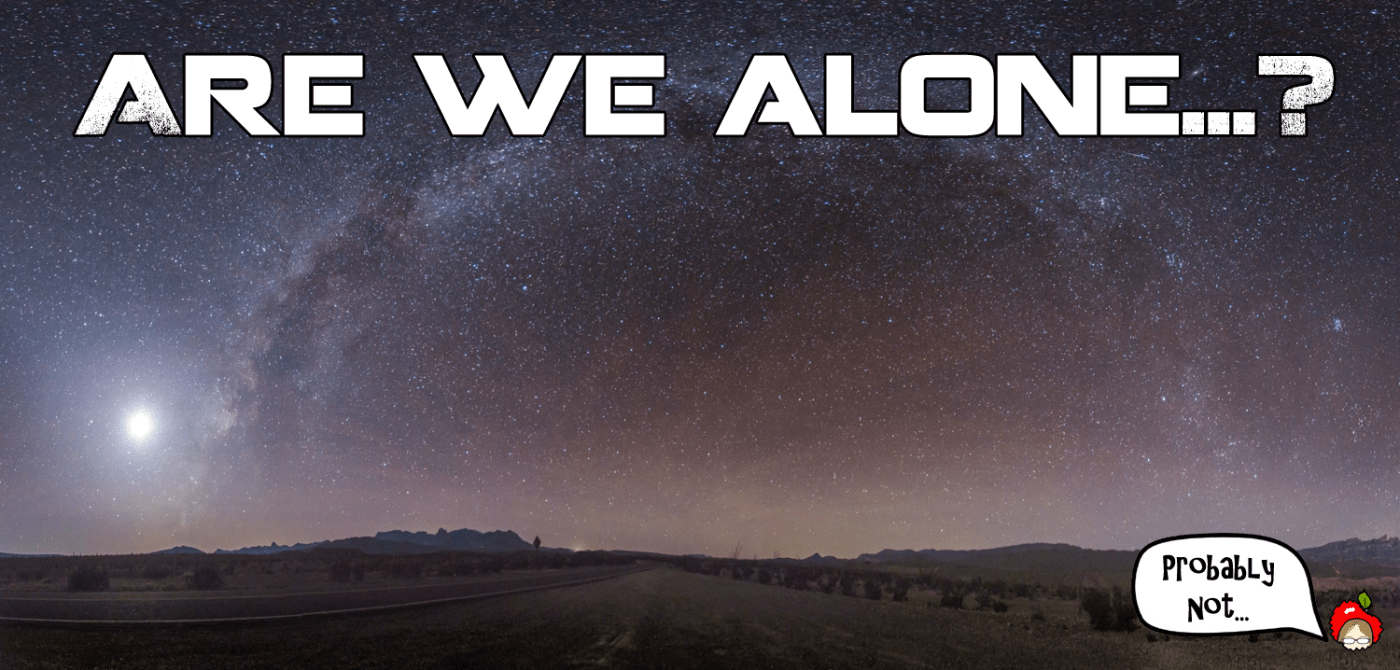
I Hunt Aliens for a Living

When people find out that I’m an astrobiologist – that is, my work concerns the search for life on other planets, amongst other things- invariably, the first question is, “Have you found any yet?”

So, to start, I’d like to say for the record, that no, I haven’t (believe me, you would have heard about it if I had). But while that goal remains unattained, astrobiologists have still made astounding discoveries about life in the universe – and the finding of truly alien life may not be that far off.

I think the reason people find my field of research so fascinating is because it tackles some very foundational questions. How did life originate? Under what conditions can it survive? Where else might we find it? And what might it look like when we do? Because of the scale of these questions, astrobiology isn’t really a single field, per se – but rather a collections of many different disciplines (including, but not limited to, astronomy, geology, chemistry, biology, and planetary science), all trying to come up with answers.

Moon
Strap in for a good ol’ fashion existential crisis!

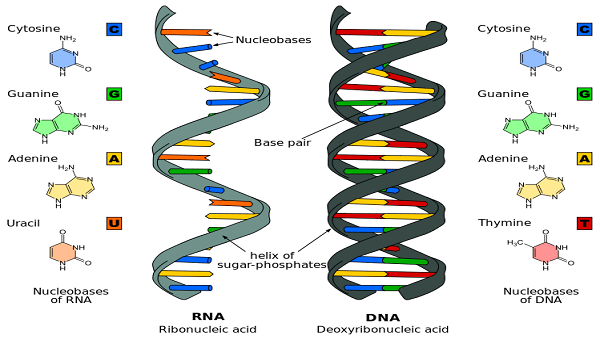
In order to determine the likelihood of finding life elsewhere in the universe, we first must know how easy or difficult it is for life to emerge in the first place. This is the realm of the prebiotic chemists, who focus on how living systems can develop from simple chemistry (sometimes poetically referred to as abiogenesis). There are different theories as to how this happened – some scientists suggest that RNA, a molecule similar to DNA that has the capability to reproduce itself may have been the forerunner to life as we know it; others suggest that metabolic processes, or the creation of simple bubble-like “protocells” set the stage for life. It should be noted that these theories are not necessarily mutually exclusive – it has been suggested that life may have originated independently multiple times on Earth, competed and merged with each other, and finally gave rise to the biosphere we know today.

Difference-DNA-and-RNA.jpg

I should note that a general assumption about life in the universe is that it’ll most likely be similar to us, biochemically speaking. The foundations of Earth biochemistry are carbon (due to the fact that it can easily form complex molecules) and water (which is particularly good at dissolving molecules, and appears to be abundant through the universe). The latter was considered so key to life as we know it that, for a period of time, the motto of NASA’s astrobiology program was “Follow the Water” (this is also why there’s so much buzz whenever NASA announces the detection of liquid water elsewhere in our solar system). With that said, more exotic biochemistries – using silicon instead of carbon, for example, or using ammonia or methane instead of water – have also been proposed.

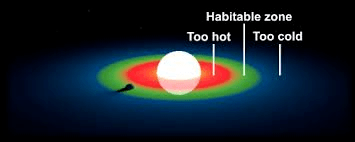
In addition to how life comes into being, we also must know how many places are available for it to live. One approach to this question is studying the abundance of habitable planets in the universe. Exoplanets – planets found around stars other than our sun- have been discovered to be staggeringly common. The Kepler space telescope mission, in particular, has found dozens of potentially Earth-like worlds, many located in the “Goldilocks zone” of their main star (where the temperature is “just right” for liquid water to exist on the surface).

GZone.png

We don’t know necessarily know if these planets are actually inhabitable or not (though we hope to answer that with future missions, such as the James Webb Space Telescope and Transiting Exoplanet Survey Satellite; I’m particularly fond of the latter since it shares my name), but these early findings are certainly promising.

Another angle on the question of habitability is studying the conditions on which life can survive – especially in environments that seem extreme and inhospitable to us. As it turns out, life is extraordinarily hardy, with organisms, known as extremophiles, making their homes in even incredibly harsh surroundings. From microbes living in the superheated water of hydrothermal systems to radiation-eating fungi discovered in the ruins of Chernobyl , it appears that life is amazingly adaptable. While most extremophiles are microbes, there are some more complex organisms that hold this distinction as well – my particular favorite being the iceworm, a glacier-dwelling invertebrate that is so well adapted to the cold that it will literally melt if its temperature is raised too high above freezing.

ice-worm_1813.jpg

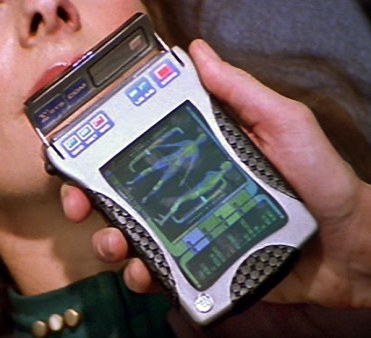
So, having established how life might originate and where it might survive, the next question is how might we detect it? This brings us to one of the primary areas of research in astrobiology – the identification and detection of biosignatures. Biosignatures are simply the chemical and physical traces left by living systems on their environment. A classic example is the presence of both methane and oxygen in the Earth’s atmosphere – since methane isn’t chemically stable in those conditions, some process must actively be producing it (incidentally, methane isn’t stable on Mars, either – which is why there was such excitement when very low levels of it were detected by the Curiosity mission). Biosignatures can also include microfossils or other geological traces left by microbes, and spectral lines in the light reflected off a planet indicating the presence of chlorophyll.

Nemesis_tricorder
I am still waiting for my engineering counterparts to hook me up with one of these.

Related to biosignatures is probably the most famous aspect of astrobiology – the search for technosignatures. As the name suggests, these are indicators of the presence of a technological civilization. SETI, the Search for Extraterrestrial Intelligence, is the most well known effort to locate signs of an advanced aliens, but it is not the only one- there also astrobiologists keeping their eyes peeled for everything from signs of astroengineering (constructions the size of stars) to potentially looking for the lights of alien cities in the spectral signatures of planets. A find of this sort is the holy grail of astrobiology – after all, as exciting as an alien microbe might be, we’rd really prefer something we could talk to.   It’s worth noting, though, it is statistically unlikely that any other alien civilization is at the same technology level as us, and may be much further advanced on the Kardashev scale, so they may not be as interested in what we have to say.

Are we alone? Where did we come from? These are just some of the questions astrobiologists hope to answer. And, even better, you can help the astrobiology community answer them, too! The field has been a pioneer in the use of citizen science – recruiting assistance from everyday people.   Projects include SETI@Home (a screensaver that uses your computer’s idle processing power to search for signals in SETI radio data) and Planet Hunters (a website where users can help detect planets around other stars).

PlanetHunters
Be part of the search!

So, if you find the search for life in the universe as thrilling and fascinating as I do, then feel free to join in the fun! Who knows- you might just find help us find something.

And I’d finally have a good answer for “Have you found any yet?”


Tess

Tessa is a 28 year old PhD student, and perhaps the world’s only queer trans astrobiologist. A nerd going way back, her interests include science fiction, space exploration, sustainability, science communication, and feminism and gender. Her hobbies also include horseback riding, playing the flute, social dancing, knitting, and occasional attempts at writing fiction. She currently resides in Tempe, AZ with her even nerdier fiancee and a mastiff mix who thinks he’s a lapdog. She tweets occasionally @spacermase.

The Top Five Books That Turned Me into a Horror Nerd

Hi. My name is Claire and I am an unashamed horror nerd. I love everything that ranges from bloody and gory, to the tortured and psychological – if it gets my heart beating fast and leaves me looking over my shoulder, then you can consider me a fan. It doesn’t matter if it’s a film, game, comic or book, if it scares the shit out of me then I will love it.

As well as consuming horror, I love creating horror. Up until this year, I was running a series online based on slenderman myth along with Irish mythology called She is The Huntress. After having to cut the series short due to personal disputes, I am now rewriting it as a novel and hope to have it released next autumn. Writing something that will pull people into reading it despite not wanting to see what’s waiting for them on the next page is a thrill in itself, and having got into horror so heavily via books – my parents couldn’t dictate what I read as a child as easily as they could read BBFC ratings on films – my ultimate hope is that I can make others feel the same chill I did.

So, how did I become so enchanted by the genre? These books had a hand in it. Sit back, get comfy, and make sure the door is locked…

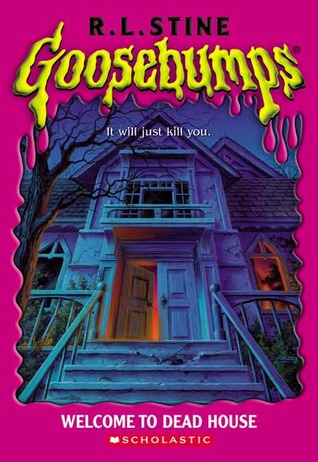
Goosebumps: Welcome To Dead House – R.L. Stine (1992, Scholastic)
H215_SCH_GB1DeadHouse_0.tif

Who didn’t love Goosebumps back in the day? I discovered this book in my primary school’s library, and was curious about the gorey cover. The plot follows a family that moves into a new house (something I did a fair bit in my youth) and finds that all is what it seems in their new dwelling. Suddenly, zombie children! Fake great uncles! Spooky real estate agents! A dog!

For an eight year old girl, I was holding true terror in my hands as I read along. This book lead me to read through as much of the Goosebumps range of books that I could find in any library I came across, as well as the well-loved TV series, and soon my feet were firmly placed in the genre. I also have a huge amount of admiration for author R.L. Stine who has made his living scaring children senseless. What a wonderful bastard.

Point Horror: Teacher’s Pet – Richie Tankersley Cusick (1991, Scholastic Point)

teacherspet

My cousin/stand-in sister Rox got me into the Point Horror series as came to the end of my time in primary school and found I needed something a little more frightening to whet my wicked whistle. It also introduced me to a whole different type of fear – obsessive people. A naive teenage heroine who loves to write and be scared… oh, I can picture her so clearly.

Suddenly, a handsome, fragile teacher who falls for her – I always pictured him as my old history teacher Mr Clayton – and a demented stalker enter the scene and our heroine is left scared for real! It had everything I wanted in a book, suspense, drama, and a protagonist I could, strangely enough, relate to. Like ghosts, zombies and dentists, obsessive stalkers are fun to fear in fiction, but should be avoided in real life.

 Misery – Stephen King (1987, Viking)

misery

I actually borrowed this off my nan (AKA, my reading hero) and found it feeding further into the fears left from Teacher’s Pet. A talented writer, a demented fan, an axe… it was a perfect story. It had a heavy, claustrophobic feel to the whole story, along with the tension that built the longer that our protagonist Paul was kept captive by His Number One Fan Annie.

It opened my eyes to the legend that is Stephen King and his extensive back catalogue of horror and suspense – my particular favourites include Pet Sematary, Carrie and Cell, as well as The Running Man. His writing is sheer perfection, and I implore every horror fan out there to pick up at least one of his books in their lifetime. You won’t regret it.

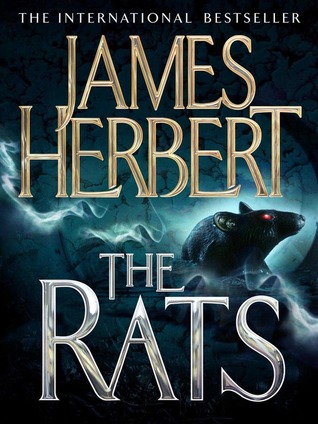
The Rats – James Herbert (1974, New English Library)
therats

James Herbert was a superb British writer who passed away back in 2013. He was exceptionally talented for painting a gruesome picture involving gore and violence, and I recommend this book to anyone reading this just like it was recommended to me by my mom who read this back when she was my age now.

I love rats.They’re adorable, intelligent little animals and they make wonderful pets – but not the rats in this book. They are vile, disgusting mutated monsters who rise from under London and begin to attack people without provocation. One of their first victims in the book is a baby. Herbert does not shy away from shock and mutilation in his debut novel and it makes for truly unsettling reading.

American Psycho – Bret Easton Ellis (1991, Vintage Books)

american psycho

The odd one out in my selection here, but the book that cemented my fear of human beings and made me question sanity as it stands. This is not a horror book, but it is still shocking, graphic and paints a picture of a deplorable human being in main character Patrick Bateman. Most people will know this story from the iconic performance that Christian Bale gave in the 2000 film adaptation – he based his version of the character on Tom Cruise – but having read the book, I can assure you that the more graphic parts were definitely left out, probably so it would actually get shown in cinemas.

As the book goes on, we are left wondering if anything we are being told by Bateman is true. Is he a psychopath? Is he leaving a bloody trail? Or is he just another jaded yuppie? It is a chilling insight into his mind – as well as a graphic tale of sex, violence and madness.


So there you have it! These are the books that cemented my love for the written fright. As for my currently reading section, here is what I am slowly devouring…

  • Red Dragon – Thomas Harris
  • House of Leaves – Mark Z. Danielewski
  • Horns – Joe Hill
  • Code Junkie – Jeffrey Koval Jr

If you have any horror book suggestions, or anything to say about the books I’ve spoken about here, please leave me a comment and we’ll have a chat! Until next time friends, take care – are you sure all the doors are locked?


ClaireClaire is a foul-mouthed British twenty-something who spends most of her time pretending to be an adult. Her nerd status started from an early age with her dad’s love of sci-fi and developed through a love of gaming, reading and horror. As well as volunteering for a charity, Claire writes about her life with borderline personality disorder (BPD) and mental health over at her blog, as well as tweeting nonsense over as @MouthAndSpoons. The dream is to either make it as a successful writer, or go into mental health research. She lives at home with her equally nerdy husband, their dog Lady, cat Pip and a lot of fish.

16 Dealing With Criticism – Some Nerd Girl Original Webcomic

Those one star ratings can be a bitch. And I MIGHT still be learning how to cope with criticism.

It’s probably a good thing I don’t have an actual nuke the site from orbit (working) button.


AlexAlex is our resident Webcomic creator. He grew up in Puerto Rico, but didn’t reach true Nerdom until he came state side when he was in middle school. He’s been drawing since he was five, but has only started posting Webcomics in the past year. You can check out his amazing and original work at tapastic.com/gomezalexj.

Blog at WordPress.com.

Up ↑