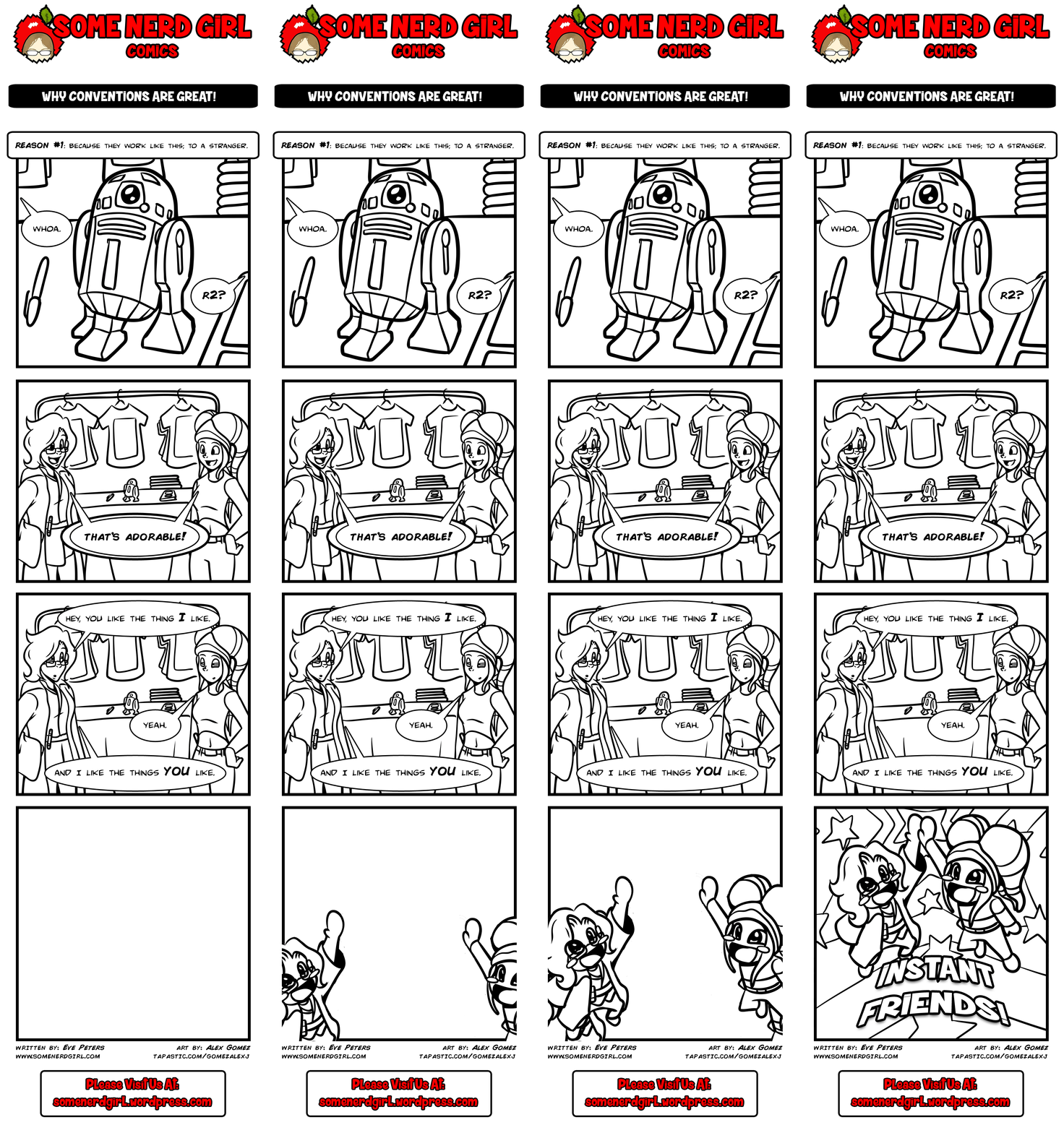
If only making friends were so easy in the ‘real world’!
Join us every Monday for a new original Some Nerd Girl webcomic!
Alex grew up in Puerto Rico, but didn’t reach true Nerdom until he came state side when he was in middle school. He’s been drawing since he was five, but has only started posting Webcomics in the past year. You can check out his amazing and original work at tapastic.com/gomezalexj.
When most people hear the terms “scientist” and “inventor,” they picture a wild-haired, lab-coated man like Doc from the Back to the Future movies. But the reality is that a wide variety of people have contributed to the STEM (Science, Technology, Engineering and Mathematics) fields.
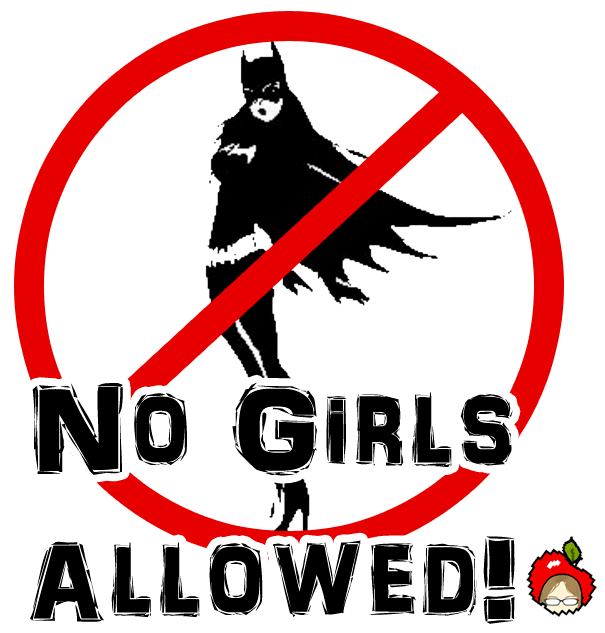
Which is good because this just wouldn’t work.
Here are the stories of five badass women whose hard work and creativity changed the landscape of the modern world.
1. Margaret Knight
Having your design stolen and patented by someone else before you could even finish your model for submission might be too much for some people to handle, but not for Margaret Knight. She knew something about hard work and hardship. Her first design – a cover for a flywheel to prevent industrial accidents – came about after she saw someone get killed in the factory where she worked at the tender age of twelve. So when Charles Annan patented her machine in 1871, she sued him and won. Margaret went on to found the Eastern Paper Bag Company with a business partner, manufacturing the world’s first square-bottomed paper bags. By the end of her prolific career, she had 87 patents under her belt. No wonder she is still one of the best-known female inventors in the world!
A one of a kind lady and just one of many patents!
2. Dr. Shirley Ann Jackson
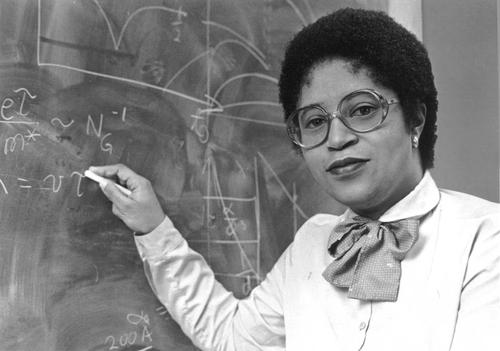
If Margaret Knight was a genius with machines, Dr. Shirley Ann Jackson is a master of physics. Born in 1946, Dr. Jackson was the first black woman to earn a doctorate at the Massachusetts Institute of Technology. That alone would be pretty impressive, but she didn’t stop there. Her work laid the foundations for such groundbreaking technology as fax machines, touch tone phones, solar cells and even fiber optic cables. So the next time you use your internet connection, make sure to thank Shirley Jackson! She is also the president of Rensselaer Polytechnic Institute in New York (where she has helped raise over a billion dollars for philanthropic organizations), has served on 14 boards of directors, has received many honorary doctorate degrees, and was the recipient of the CIBA-GEIGY Exceptional Black Scientist Award, the Thomas Alva Edison Science Award, and the Richtmyer Memorial Award. Dr. Jackson is truly an accomplished woman of science.
She’s good, and she knows it!
3. Dr. Temple Grandin
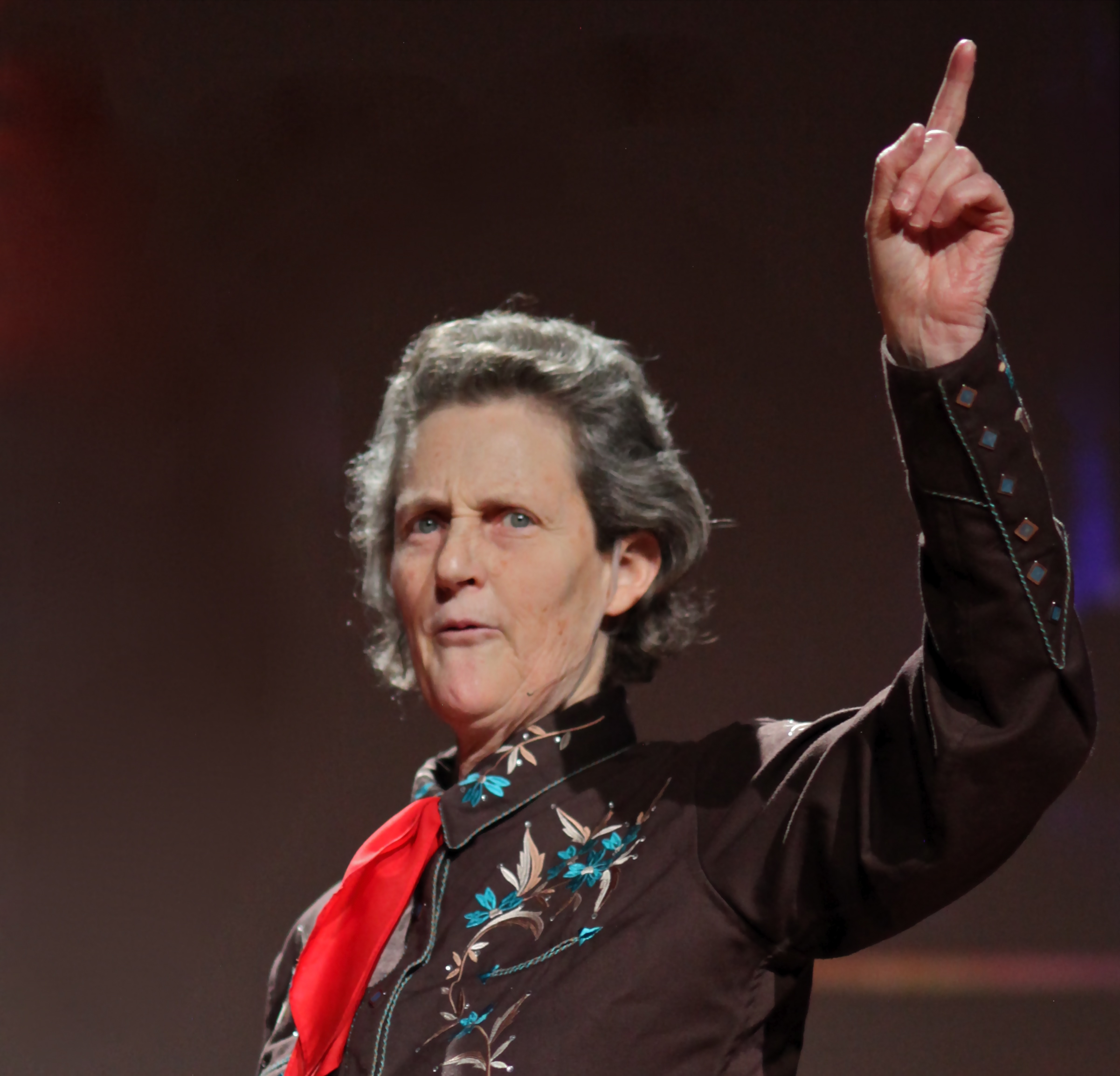
Another woman who knew something about overcoming obstacles was Dr. Temple Grandin. Born with autism, Grandin wasn’t able to speak until the age of four. Despite this, she went on to earn a doctorate in animal science and become an author and motivational speaker. Her work in the area of ethical treatment for animals led to the invention of humane animal restraint systems, and she has designed livestock handling facilities around the world. She is also a prominent expert on autism, having published numerous books in the field. Now that is taking life’s lemons and making lemonade!
Here she is being awesome while giving a TED Talk.
4. Marion Donovan
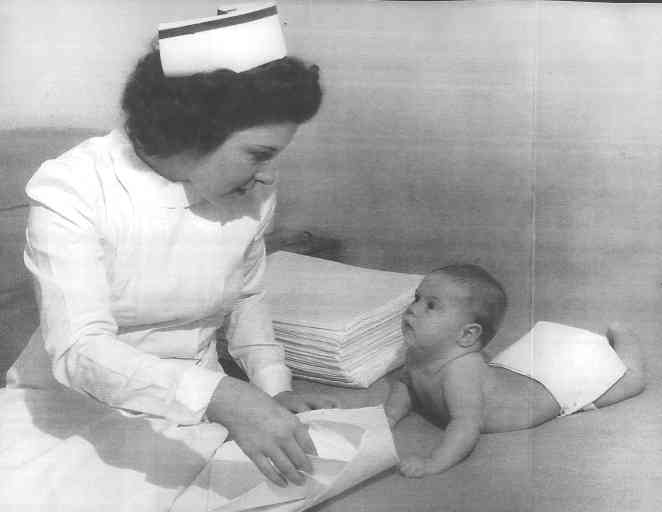
Marion Donovan came from an inventive family. As a child, she was exposed to the manufacturing plant of her father and uncle, men who invented improvements to industrial machinery. So when, as a new mother, she became frustrated by the messiness of changing her baby’s cloth diapers, she decided to do something about it. She used her sewing machine to sew a layer of waterproof material to the outside of a cloth diaper to contain the mess. She tried to interest manufacturers in her invention, without success. Undeterred, Donovan debuted her invention – dubbed the Boater – in Saks Avenue in 1949. It was a huge success, and the rest is history. After obtaining a patent on her invention, Donovan sold the rights to Keko Corporation. By the end of her life, Donovan had obtained 20 patents and a degree in Architecture from Yale University.
This woman had her priorities in order. Can you imagine how thrilled women of the past would have been to have this??
5. Bessie Blount
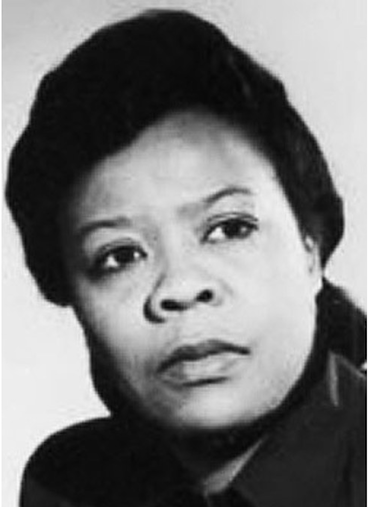
Bessie Blount’s training wasn’t in engineering, but in physical therapy. She didn’t let that get in the way of inventiveness! She worked with WWII veterans, mostly amputees. Seeing their struggles with everyday life, she decided to try to improve their lot. In 1951, Blount patented a device that would allow them to feed themselves. It worked by sending a mouthful of food down a tube whenever the tube was bitten. Sadly, she was unable to make money from her invention, and so gave the rights to the French government, who put the device (and a smaller, more portable version she also invented) to use. Many injured war veterans and other amputees were helped by her idea.
It is a truly remarkable person that care so deeply for others that their contributions echo into the future!
So the next time someone says something about how girls can’t do math, or women shouldn’t go into the sciences, point at these five badass ladies. Women can not only get into the STEM fields, but they can kick ass and take names in them!
If you’re interested in reading about or contributing to a program that helps girls get into STEM fields (and why wouldn’t you be, after reading about these badass women??), check out Girls in Technology at http://www.womenintechnology.org/git. It is an organization run by Women in Technology and actively works to build community between women in tech industries. Girls in Technology mission statement is to work to inspire girls in grades 6 to 12 toward successful futures in the Science, Technology, Engineering, Arts and Mathematics (STEAM) industries.
Nik is an aspiring fantasy novelist and recovering roller derby aficionado. When she isn’t writing articles, she’s wasting brain cells remembering minutiae on such topics as Avatar: The Last Airbender, Xena: Warrior Princess, Buffy the Vampire Slayer, and assorted terrible vampire novels from the nineties.
This past year, we have witnessed a tremendous struggle over what it means to be a nerd (or a fan, or a geek, or a gamer, and so forth). From GamerGate to the debacles over the Hugo Awards, the debate has raged across multiple media, and resulted in no small amount of cyber-harassment and worse. And, often, the crux of the conflict has been a simple question: should nerd culture remain primarily the domain of men? Or should it be open and inclusive to all?
Plenty has been written on the topic, by commentators with much better nerd pedigrees than me – but nonetheless, I like to think I do offer a bit of a unique perspective on the issue. As a trans woman, I’ve seen first-hand how men and women are received by nerd culture, and it’s shown me a lot about how male self-identified nerds interact with masculinity.
Or, in some cases, avoid it altogether!
During my teen years, being seen as a nerd seemed like something as a blessing. Male nerds are largely excepted from much of the expectations of traditional masculinity. No one’s surprised if you don’t know anything about fixing cars, or professional sports, or any other stereotypical male topic. If your hobbies seems odd or unconventional – such as being the sole male member of the piccolo section in the marching band – that’s easily attributed to your (presumed inadvertent) lack of social conformity.
Or perhaps this is just a little known lady wooing technique…
Romantic or sexual failure with women- perhaps the ultimate mark of shame in the view of conventional masculinity – is not only accepted, but virtually expected. And while those outside the nerd community may mock male nerds for their failings at masculinity, within nerd community such traits are considered normal, even a point of pride.
So far, this seems like an improvement over traditional masculinity, at least when we’re talking about high school age. It certainly did to teenage me – no one (not even me) bothered to question why I had so little interest in following stereotypical male interests, why I always seemed a little uncomfortable or awkward, or why I never socialized with my more conventionally masculine peers. He’s a nerd, they’re like that. I’m a nerd, we’re like that.
One of us…!
However, if you look closer, for all its pretensions of being above and beyond the toxicity of traditional masculinity, nerd culture possesses its own brand of masculinity that’s just as toxic – and it’s exactly this conceptualization of masculinity that is currently wreaking havoc.
At least part of the problem, I suspect, is that male nerd culture never really disposed of perhaps the two most potentially dangerous elements of traditional masculinity – insecurity and entitlement. It merely cloaks them under a guise of social indifference.
All for one and one for one!
Rather than being acknowledged and explored, the insecurity about how others – women especially – perceived us, was deeply internalized. Romantic rejection was so assumed that it was often seen as futile to even ask someone out. This, combined with the sense of entitlement that is reinforced in media depictions of nerds, lead to a slow boiling resentment of the perceived rejectors, which can easily fuel such activities as doxxing, SWATing, and other forms of harassment.
But since male nerds ostensibly are excluded from traditional masculinity, they assume that they can’t possibly be the bad guys – and thus, anyone bringing attention to the more problematic aspects of male nerd behavior only further stokes the flames of resentment and hostility. The result is just as dysfunctional as traditional masculinity, and has just as much potential to hurt women – who are all too often viewed as a potential adversary.
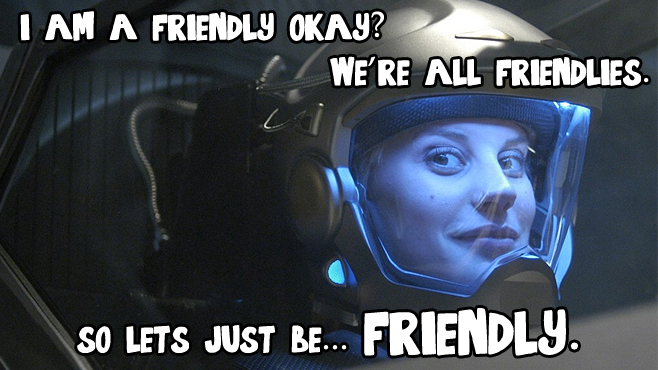
The only thing you need to worry about is our mad board game skilz.
Unsurprisingly, female nerds often end up bearing the brunt of all this toxicity. If our nerdiness hasn’t been sufficiently vetted, our presence is resented as “fake” or “attention whores” (since apparently there’s no other conceivable reason for us to be in nerd spaces) – never mind the fact that women have been a major part of many fandoms from the very beginning. This isn’t really surprising, since our presence is considered strictly optional to begin with (I heard some variation of “Eh, women, who needs ’em?” more than a few times from some of my male nerd friends in high school). If we are judged worthy by the gatekeepers and allowed in unmolested, the cost is our own womanhood – we are suddenly “just like one of the guys,” better than those “other girls” (though ultimately even this status is conditional).
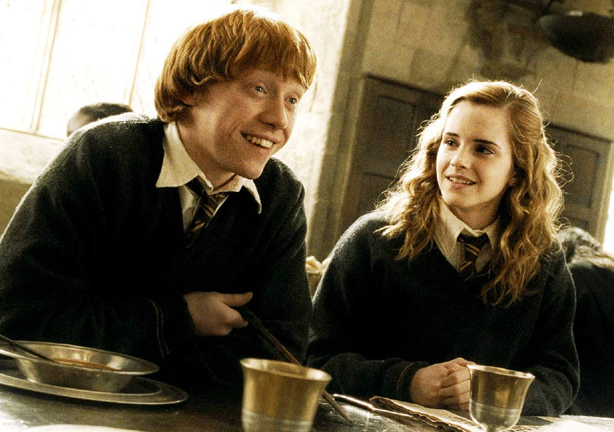
How long did it take Ron to get the clue that Hermione liked him??
I have no doubt that there are plenty of dejected teenage girls out there who embraced that distancing from conventional gender expectations, just as I embraced the male version of it to escape my own gender issues. But nonetheless, the end result is that women are never really considered part of “real” nerd culture.
This feeling of being an outsider was particularly shocking to me, since I’d been shielded from it during my years of presumed maleness. The first time I entered a used game store with my fiancée (who was hunting for old PS3 games) post-transition, the change in how I was perceived was palpable. We were the only women in the store, and there were more than a few glances in our direction, glances I’d never received while presenting male. You get used to it, my fiancée later told me.
State your business, female.
What is to be done? How can male nerd culture live up to its own expectations of a healthier masculinity? First and foremost, male nerds need to have an honest discussion about their own insecurities. This in of itself could be a challenge, since male nerd masculinity discourages open talk of feelings just as much traditional masculinity does, albeit for slightly different reasons (emotional discussion is considered below the logical, ordered mind of the male nerd). But if that can be accomplished, work can then begin on dismantling much of the hostile suspicion of women and other “outsiders”. It is only then that nerdom can truly achieve what it has long promised- a community bound only by shared passions that will accept you, no matter who or what you are.
If nerdom cannot foster the radical acceptance that proclaims to have, it may be in for a rough ride. If gamers are dead – because now everyone’s a gamer – than we may not be too far off from the time when nerds are dead. After all, in world where Lord of the Rings, Harry Potter, The Walking Dead, Game of Thrones, and more, have all become thoroughly mainstream, the walls that distinguish who’s a nerd from who isn’t are slowly eroding.
In the not too distant future, everyone may be able to rightfully call themselves a nerd – and I strongly suspect the community would be better off for it.
In the immortal words of my homegirl…
As for me, personally, I drifted away from most of my high school male nerd friends as time went on. I eventually found the disdain for emotional expression, casual misogyny, and bizarre one-up-man-ship over lack of social relations too obnoxious to bear. This isn’t to say I’ve abandoned nerdom – after all, I’m an astrobiologist, my life basically is science fiction – but I look forward to the day when male nerds, my brothers and former comrades, welcome me with open arms.
Tessa is a 28 year old PhD student, and perhaps the world’s only queer trans astrobiologist. A nerd going way back, her interests include science fiction, space exploration, sustainability, science communication, and feminism and gender. Her hobbies also include horseback riding, playing the flute, social dancing, knitting, and occasional attempts at writing fiction. She currently resides in Tempe, AZ with her even nerdier fiancee and a mastiff mix who thinks he’s a lapdog. She tweets occasionally @spacermase.
 Alex grew up in Puerto Rico, but didn’t reach true Nerdom until he came state side when he was in middle school. He’s been drawing since he was five, but has only started posting Webcomics in the past year. You can check out his amazing and original work at tapastic.com/gomezalexj.







 Some Nerd Girl
Recent Comments